

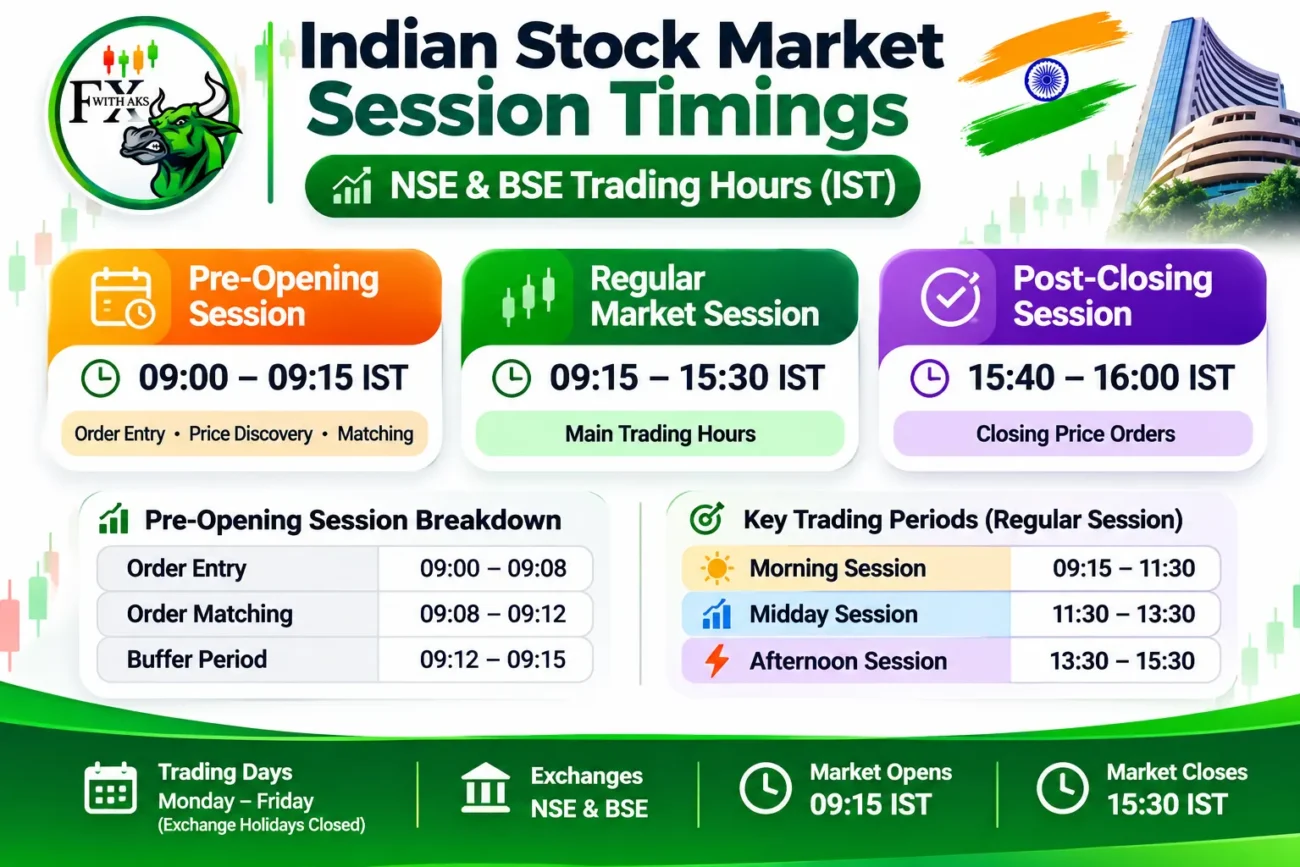
Indian Stock Market
Session Timings
Complete guide to NSE and BSE market hours in Indian Standard Time. Understand pre-opening, regular trading and post-closing sessions.
🟠 Pre-Opening Session
🟢 Regular Market
🟣 Post-Closing Session
📊 Pre-Opening Session Breakdown
| Activity | Time (IST) |
|---|---|
| Order Entry Period | 09:00 – 09:08 |
| Order Matching Period | 09:08 – 09:12 |
| Buffer Period | 09:12 – 09:15 |
💡 What Happens During Pre-Opening?
The pre-opening session helps determine the opening price of eligible securities based on buy and sell orders. It allows the market to adjust to overnight news, global market movements and pending orders before regular trading begins.
⏰ Regular Market Trading Hours
The regular trading session is the main trading period of the Indian equity market. During these hours, eligible stocks and securities can be bought and sold continuously through the exchange trading system.
📈 Key Trading Periods
🌅 Morning Session
Market opening activity, gap movements, overnight news reactions and potential momentum opportunities.
☀️ Midday Session
Market activity may become relatively slower, although news and important events can still cause sudden movements.
⚡ Afternoon Session
Position adjustments, institutional activity and closing orders may influence market movement.
🟣 Post-Closing Session
The post-closing session may allow eligible orders to be placed at the closing price, subject to exchange rules and applicable securities. Traders should check the latest exchange notifications for current availability and procedures.
🔥 Best Time for Intraday Trading
🔥 Market Opening
Often experiences higher volatility due to overnight news, opening gaps and fresh market orders.
📊 Midday
Trading activity may be relatively slower. Traders often wait for clear market structure and confirmation.
⚡ Market Closing
Market momentum, institutional activity and position adjustments can increase trading activity.
⚠️ Important for Intraday Traders
Higher volatility does not guarantee profitable trades. Always use proper risk management, stop-loss orders and a defined trading plan.
📅 Indian Stock Market Holidays
NSE and BSE generally remain closed on Saturdays, Sundays and officially announced exchange holidays. Special trading sessions, including Muhurat Trading, may be conducted on announced dates.
📌 Check Before Trading
Always check the official exchange holiday calendar before planning your trading activity.
❓ Frequently Asked Questions
What time does the Indian stock market open?
The regular Indian equity market opens at 9:15 AM IST. The pre-opening session begins at 9:00 AM IST.
What time does the Indian stock market close?
The regular equity market normally closes at 3:30 PM IST.
What is the pre-market session in India?
The pre-opening session runs from approximately 9:00 AM to 9:15 AM IST. It is used for order entry, price discovery, order matching and transition to regular trading.
Can I trade after 3:30 PM?
Regular equity trading normally ends at 3:30 PM. Certain post-closing or special sessions may be available depending on exchange rules and securities.
Which is the best time for intraday trading?
The opening and afternoon periods can experience increased activity and volatility. However, market conditions vary daily and no trading time guarantees profits.
Does the Indian stock market operate on Saturday and Sunday?
The regular Indian stock market is generally closed on Saturdays and Sundays, except for special trading sessions announced by the exchanges.
What is the difference between NSE and BSE market timings?
The regular equity trading hours of NSE and BSE are generally 9:15 AM to 3:30 PM IST, subject to exchange notifications and applicable market segments.
This content is provided for educational and informational purposes only. Market timings and trading procedures may change according to exchange rules and official notifications. Trading in stocks, derivatives and financial instruments involves risk. Always verify the latest timings from NSE, BSE or your broker before placing trades. FXWITHAKS does not provide financial advice or guarantee trading profits.
Educational Purpose Only
This article is published for educational and informational purposes only. The Forex market session timings, market activity, volatility and liquidity information provided here are intended to help traders understand the global Forex market.
FxWithAks does not provide financial, investment or trading advice. Trading Forex, Gold, Crypto, Indices and other financial instruments involves substantial risk and may result in the loss of your invested capital.
Market conditions, volatility and trading opportunities may change at any time. Always conduct your own research, use proper risk management and consult a qualified financial professional before making any financial decisions.
